
Winterizing Your Electrical System
Posted by Pacer on 19th Jan 2026

In many areas, winter poses a serious threat to the lifespan of any boat and its parts. Once freezing temperatures set in, boats that are not properly prepared will be subject to the elements with no form of protection. When it comes to winterizing, most people cover the basics. They change their oil, stabilize the fuel, and drain the pumps, but they fail to consider their electrical system. If you store your boat for months without noticing the beginnings of corrosion on your electrical connections, what do you think will happen? In all likelihood, it will get worse. Let’s start by discussing how the cold affects your boat during storage.
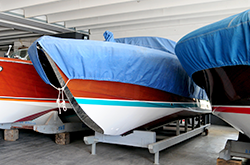
Once you leave your boat in storage, you won’t be there to see condensation accumulate or corrosion spread. In fact, it is the condensation that leads to the corrosion. This is why some boaters store their boat thinking it’s fine only to see corrosion when they come back for it. They didn’t factor in condensation. Beyond that, the cold temperatures degrade and discharge batteries. Luckily there are steps you can take to protect your boat and ensure a happy springtime retrieval.


1. Test your electrical parts
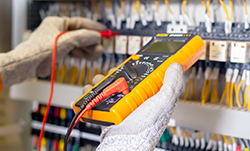
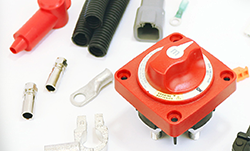
The first step to winterizing your electrical system is to test it. That means making sure that every piece of equipment is functioning as it should. If you find an issue, address it immediately and repair or replace the part if needed. Were any of your switches giving you trouble lately? Test them and find out why. Maybe it is time to replace your switches with new ones. This way next year you’re ready to go with new switches that are sure to function properly. Since you might be replacing some of your switches, it’s a good time to consider replacing the switch covers as well.
2. Take care of your batteries
Once you know that all your electrical parts are functioning properly, the next step is to address your batteries. First, remove the batteries and carefully clean any corrosion away from the terminal posts. If you find corrosion here, it will likely be on your battery cables, but we’ll address that soon enough. Once your batteries are cleaned and corrosion-free, test them. If the cranking amps are good, fully charge them and store them somewhere dry and safe. If, on the other hand, the cranking amps are too low, it’s time for new batteries. Once you have your batteries taken care of, it’s time to look at your battery cables.
3. Inspect your battery cables
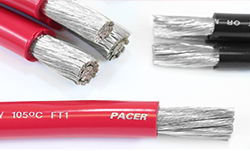
As we mentioned above, if your batteries have corrosion present, then your battery cables will as well. The first step is to fully inspect the length of your cables for any damage to the insulation, connectors, or exposed conductors. If you find damage to the insulation or exposed conductors, then it is time to replace your battery cables. Be sure to only use highly flexible marine-optimized battery cables. If your connectors have any form of corrosion, address that immediately. Depending on the severity of the corrosion, you may want to consider replacing the connectors. The bottom line is that your battery cables are the lifeline of your motor. If you do not properly maintain your batteries or battery cables, you are going to run into trouble. Once your battery cables are in tip-top shape, you should turn your attention to your wiring system.
4. Look at all your marine wiring.
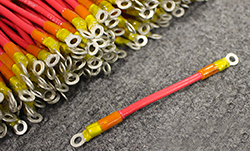
Just like your battery cables, you’ll want to inspect your wires for signs of damage to the insulation or exposed conductors as well as signs of corrosion. If your wires show signs of damage in particular areas, you can either splice in a replacement wire or replace the entire wire. If your wires have cracked insulation or show severe signs of wear, you will need to replace them. It is better to be safe than sorry. Make sure to only use marine-optimized wire and secure the wire properly using cable ties or other similar methods. People often fail to factor in the constant vibration and flux of the marine environment. Taking that into consideration and preparing accordingly can avoid potential headaches down the road.
5. Verify your connectors and terminals
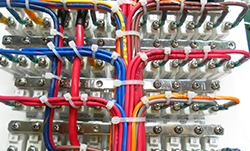
Any point of exposed electrical connection is subject to moisture and, as such, corrosion. This means that any terminal or connector you have in your electrical system may be exposed to corrosion. A simple method is to start at one end of your electrical system and visually verify all connection points. With your batteries disconnected, you are safe to physically check connection points for signs of corrosion as well as tightness. If you find any connection points that have corrosion, address it immediately. This likely means replacing the terminals. It’s a good idea to protect exposed connections by either covering them with heat shrink or using an electrical sealer like Scotchkote.
6. Thoroughly inspect busbars.
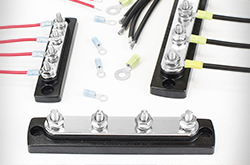
With your batteries, battery cables, marine wiring, and connectors all accounted for, the last thing to inspect are your bus bars. Visually inspect them for signs of corrosion and replace any bus bars that cannot be easily cleaned due to the progress of corrosion. If there is no corrosion or damage, then focus on testing each and every connection for tightness. Over time, busbar screws tend to loosen due to the constant vibration they are subject to. With your bus bars accounted for, we can move on to the final step, which should be done after all winterizing is complete. That includes handling your oil, engine, fuel, and anything that needs to be taken care of.
7. Clean your boat and properly cover your boat
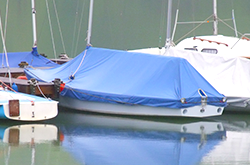
The last step is deep cleaning your boat. This isn’t just washing it with soap and calling it a day. In contrast, this is washing every surface top to bottom, including nooks and crannies, lockers, and dry storage. Again, this is only to be done once all other steps are completed. You want your boat as clean as it can possibly be, and that means covering it as soon as it’s clean and dry. When washing, use a marine antimicrobial soap, if possible, to prevent the growth of mildew and mold. Once done, make sure to fully dry the boat. Placing it in direct sunlight will speed up this process. Once the boat is 100% fully dried, cover it with the appropriate cover and place it in storage.
Importance of protecting your electrical system during the winter
The important thing to remember is that you will likely not see your boat for a few months, so you want to do everything in your power to prevent moisture, condensation, or corrosion from accumulating. Preventative steps can go a long way to protect your investment for the winter season. This article is meant to cover much of the electrical aspect of winterizing your boat. We purposely did not cover oil, fuel, motors, or any other areas due to the abundance of material already available. We value your time, and as such, got straight to the point. Remember that winterizing is a multistep process, so be sure to consider every aspect of your boat’s needs.
Find your electrical supplies in one place
As you are winterizing your boat and considering replacing battery cables, marine wire, switches, and more, remember that Pacer is the premier electrical solutions provider for some of the biggest boat builders in the world. With over forty years of experience, we have earned the reputation of a trusted partner. Rather than scouring the internet for high-quality parts, you will find everything you need to handle everything we’ve covered at PacerGroup.net. With a cultivated catalog of over 9,000 high-quality products, you are sure to find exactly what you are looking for. Stay safe and keep boating!